The Intersection of Literature and Music: How Songs Inspire Writers
Exploring the Connection Between Words and Melodies
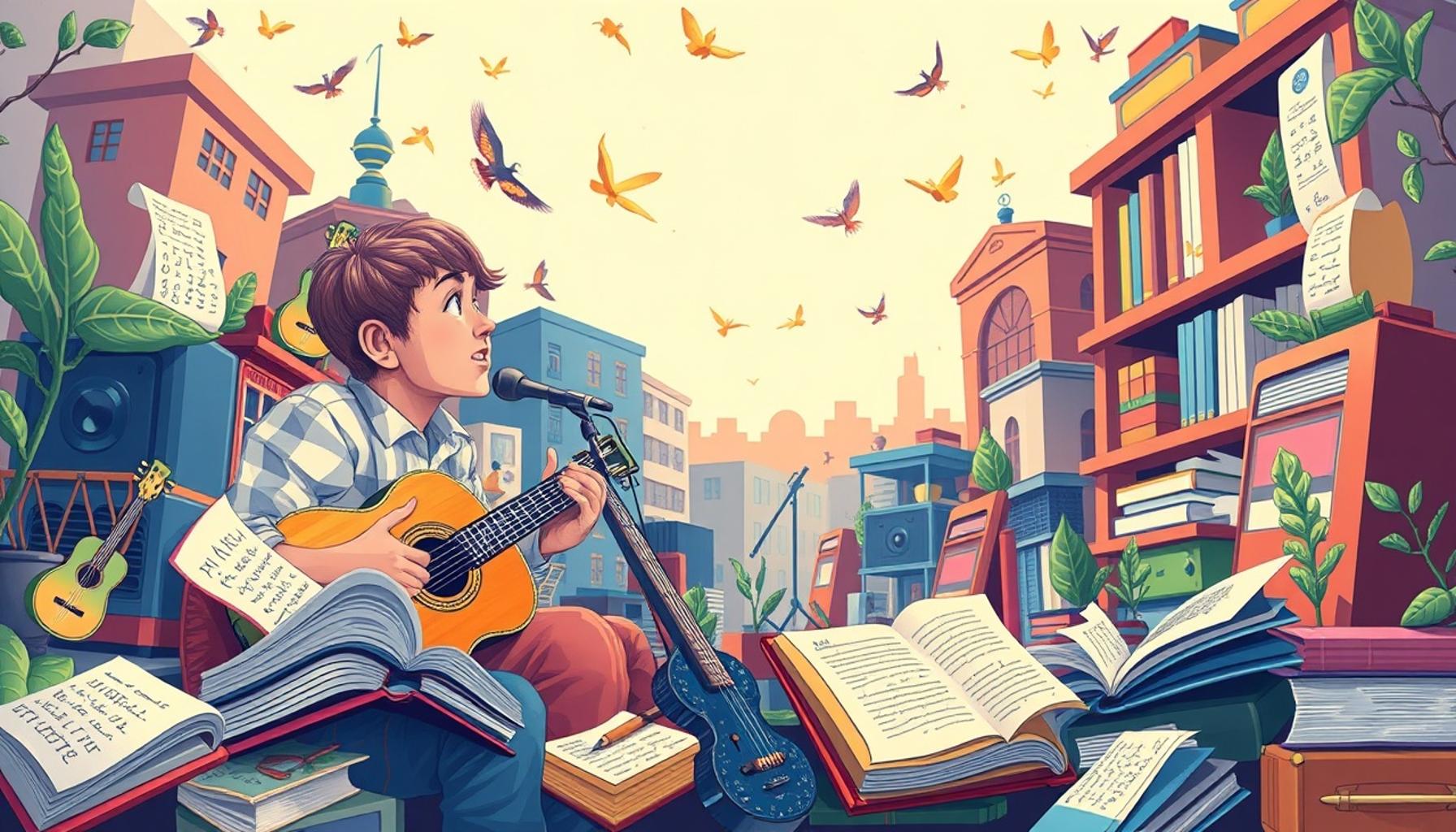
Throughout history, literature and music have intricately intertwined, creating a rich tapestry of inspiration that has shaped culture and art. The emotive power of songs resonates profoundly with writers, often influencing their narratives and creative processes in multifaceted ways. This article delves into how melodies can evoke feelings, memories, and ideas that serve as the ignition for the literary imagination.
Many ways exist in which music influences writing, leading to remarkable intersections between the two art forms. One of the most significant aspects is:
- Emotion: Songs frequently convey complex emotional landscapes. For instance, writers might turn to the mournful notes of a ballad to articulate grief or the upbeat tempo of an anthem to embody triumph. Such emotional cues can enhance a writer’s understanding of character depth, enabling them to craft more authentic and relatable experiences for readers. Whether it’s the sorrowful melodies of the blues or the spirited rhythms of rock, the emotional resonance of music offers a vibrant palette for narrative exploration.
- Thematic Inspiration: Lyrics can serve as a source of thematic elements that writers weave into their narratives. An artist’s song about love lost may inspire a character’s journey through heartbreak or a societal challenge reflected in the struggle for justice. For example, Bruce Springsteen’s storytelling encapsulates the working-class struggles in America, which writers can draw upon to highlight similar themes, thus enriching their own works.
- Cultural Reflection: Literature and music are mirrors of societal issues, providing rich material for writers exploring themes like identity, conflict, or change. The Civil Rights Movement, for instance, saw a remarkable convergence of music and literature as artists like Maya Angelou and Billie Holiday gave voice to the struggles of their time. Such reflections can spark powerful narratives that resonate across generations.
Numerous renowned authors have acknowledged the profound influence of music in their works. For example:
- Bob Dylan: Often hailed for his poetic lyrics, Dylan has inspired writers across genres, encouraging a merging of lyrical and literary artistry. His song “Blowin’ in the Wind” raises deep philosophical questions that resonate within literary traditions.
- Virginia Woolf: The rhythm and cadence of music inspired her narrative style. Her stream of consciousness technique reflects a rhythmic flow akin to musical composition, inviting readers into the depths of her characters’ minds.
- Nick Cave: By marrying lyrical storytelling with prose, Cave showcases an intimate connection between music and literature. His works, such as “The Sick Bag Song,” illustrate how songs can translate into powerful narratives.
As we navigate this captivating nexus of literature and music, we uncover the stories of writers profoundly shaped by the melodies they cherish. From their reflections on music’s emotional power to the way it sparks creative inspiration, these insights reveal how sound becomes an essential part of the writing experience. Join us on this fascinating journey to explore the myriad ways in which music and words come together, shaping our understanding of both art forms and the world around us.
The Emotional Landscape of Musical Influence
The connection between literature and music is undoubtedly enriched by the emotions each art form evokes. At the core of this intersection lies the profound impact of musical emotion on literary creation. Writers often find themselves drawn to the intensely personal narratives embedded in songs that unlock their own creativity. Through evocative melodies and poignant lyrics, music compels authors to explore the depths of human experience.
When encountering a particular song, a writer might experience an immediate rush of inspiration, ignited by a specific emotional resonance. The sadness of a haunting ballad may inspire vivid depictions of loss, while an upbeat tune might spark a narrative about resilience and triumph. This emotional carryover influences the way writers approach characters, settings, and conflicts, allowing them to infuse their stories with authentic emotion.
Consider the stories told through the genres of blues and folk music, which often delve into the struggles of daily life. Such songs echo timeless tales of heartache and redemption, providing fertile ground for literary exploration. The heart-wrenching lyrics of a blues artist could inspire a poignant short story about a character grappling with personal struggles, while folk songs celebrating communal bonds might lead a writer to craft narratives centered around family and togetherness.
Additionally, many writers utilize music as a tool in their creative process, often curating playlists that complement different writing moods or scenes. This practice can set the tone for a writing session, transforming the mundane act of writing into a sensory experience. By listening to the right soundtrack, authors can access a heightened emotional state that propels their narratives forward.
- Emily Dickinson: Known for her introspective poetry, Dickinson’s affinity for music—particularly hymns—shaped her exploration of life and death. Her poems echo the melodic structures of the songs she loved, creating a musical quality that enhances their emotional impact.
- Langston Hughes: Deeply influenced by jazz music, Hughes seamlessly incorporated its rhythms and themes into his poetry, capturing the essence of the African-American experience. His work exemplifies how a song’s cadence can manifest in written form.
- Joni Mitchell: An artist whose lyrics often resonate with profound imagery and narrative depth, Mitchell’s storytelling invites writers to explore themes of love, loss, and identity, significantly influencing contemporary literary voices.
The melding of music and literature isn’t solely a product of authors synthesizing their inspirations; it also extends to how music reflects broader societal narratives. As Gertrude Stein once remarked, “You can’t think about your art without being able to listen to it.” This sentiment underscores the notion that music shapes not only individual expression but also the collective consciousness that literature seeks to explore.
As we delve deeper into the connection between music and literature, it becomes evident that songs serve as a wellspring of inspiration for writers. Whether drawing from emotional landscapes, thematic elements, or cultural reflections, the interplay between these two art forms continues to foster compelling narratives that resonate with audiences across generations.
The Intersection of Literature and Music: How Songs Inspire Writers
Music and literature have long been intertwined, with authors drawing inspiration from the emotive power of songs. The melodies and lyrics can evoke feelings that transcend words, creating a visceral experience that writers harness in their craft. From classic poetry to contemporary fiction, the influence of music as a muse is evident in various forms. Many renowned authors have acknowledged how music shapes their ideas, characters, and narratives.
For instance, famous writers like Virginia Woolf and F. Scott Fitzgerald incorporated musical rhythms into their prose, allowing the cadence of language to reflect the harmony found in music. Additionally, songs often convey complex emotions, serving as a catalyst for themes in literature, such as love, loss, and identity. This symbiotic relationship enables writers to explore deeper dimensions in their storytelling.
Incorporating the essence of songwriting into literature opens new avenues for creativity. Writers can borrow the structure of a song—its verses, choruses, and bridges—to create rhythmic patterns in their writing, enhancing the reading experience. Furthermore, songs can serve as cultural texts that inform the backdrop of a story, providing context about time periods and social issues, which enriches character development and plot dynamics.
The role of music extends to helping writers overcome creative blocks. Many authors listen to specific playlists or albums that resonate with their aspirations for a piece. The sensory experience of music can lead to a flow state, allowing ideas to flow naturally onto the page. This unique blend of sensory inputs challenges traditional notions of creativity and emphasizes the evolving nature of artistic expression.
| Advantages of Musical Inspiration | Impact on Writing |
|---|---|
| Enhanced Emotional Depth | Music amplifies feelings, helping writers convey deeper emotions in their narratives. |
| Creative Block Relief | Listening to specific genres can spark inspiration and lead to a productive writing session. |
As we delve deeper into how songs breathe life into the literary world, it becomes evident that this artistic cross-pollination enriches our understanding of both mediums. The intersection of literature and music continues to inspire generations of writers, creating a reverberating legacy that resonates through time.
The Narrative Power of Song Lyrics
One of the most compelling aspects of the intersection between literature and music is the narrative power found in song lyrics. These lyrical compositions serve not only as vehicles for emotion but also as complex narratives that invite readers—and writers—to engage with their stories. Songwriters often weave intricate tales within the confines of a few verses, capturing the human experience in a way that resonates deeply. This ability to tell stories succinctly is a significant source of inspiration for writers seeking to hone their craft.
Take, for instance, the work of Bob Dylan, whose lyrics often resemble rich poetry, threading themes of social justice, love, and existential contemplation. His song “Tangled Up in Blue” offers a nonlinear narrative that captivates listeners through its vivid imagery and multifaceted characters. Writers may be drawn to such songs for their ability to convey complex emotions and narratives, prompting them to explore similar storytelling techniques in their own work.
On the other hand, songs in the country music genre, like those of Miranda Lambert, often tell straightforward yet deeply relatable stories. Lambert’s “The House That Built Me,” uses nostalgia and personal reflection as narrative tools, allowing listeners and writers alike to explore themes of identity and belonging. Such narratives can inform literary approaches, guiding authors to delve into their own memories to portray authenticity in characters who are navigating similar emotional landscapes.
This rich narrative tradition also extends to genres such as rap and hip-hop, where artists like Chance the Rapper and Kendrick Lamar craft elaborate tales filled with personal struggles and triumphs. Their lyrics challenge writers to think critically about representation and the power of voice within literature. The way these artists address social issues and personal narratives serves as a powerful reminder of the impact storytelling can have in both music and literature.
Musical inspiration can also extend to the structure of a literary work. For example, the rhythmic patterns found in a musical piece may influence a writer’s choice of sentence structure or pacing. Just as a song can build tension and release it through changes in tempo, writers may mimic this dynamic in their narratives by altering the rhythm of their prose. Techniques such as repetition or breaks in the narrative can mirror the ‘hooks’ or choruses found in songs, creating a musical quality that enhances the reader’s experience.
Moreover, the collaboration between musicians and writers further enriches this intersection. Many authors have ventured into songwriting, and musicians have taken to writing literature. The interplay between these disciplines fosters creative dialogue that enhances the production of both literature and music. For example, Nick Cave, whose contributions to music are well-known, explores deeply literary themes in his novels, demonstrating how the duality of artistry can lead to profound insights and originality.
- Leonard Cohen: A celebrated songwriter and poet, Cohen’s background in literature allowed him to craft songs that are both lyrical and literary, influencing countless authors to imbue their writing with a similar depth.
- Taylor Swift: Known for her storytelling prowess, Swift’s narrative-driven songs often serve as case studies for writers looking to develop character-driven plots and rich thematic layers.
- David Bowie: Bowie’s ability to transcend genres and create elaborate narratives in his music encourages writers to be bold and experimental in their storytelling approaches.
The exploration of narrative within music reveals the essential ways songs can inspire writers to refine their craft. By examining the unique storytelling techniques embedded in song lyrics, authors can weave rich narratives that resonate with audiences, creating a tapestry that beautifully intertwines the worlds of literature and music.
Conclusion: A Harmonious Exchange of Inspiration
The relationship between literature and music is a dynamic synergy that facilitates rich storytelling and emotional depth in both art forms. As we have explored, song lyrics often serve as a wellspring of narrative inspiration for writers, offering unique perspectives and innovative storytelling techniques that transcend traditional boundaries. From Bob Dylan’s poetic complexities to Miranda Lambert’s relatable narratives, the power of music lies in its ability to capture the essence of the human experience, inviting writers to reimagine their own narratives through a musical lens.
Moreover, the intersection of these two realms encourages authors to adopt musical elements in their prose, enhancing the rhythm and emotional cadence of their writing. By drawing from the structure and themes found in songs, writers can craft stories that resonate with audiences on a profound level. The collaborative nature of these creative fields only enriches the artistic dialogue, as seen in the works of artists like Nick Cave and the narrative mastery of Taylor Swift, reminding us that the barriers between music and literature are porous.
Ultimately, as writers look to the lyrical artistry of musicians for inspiration, they may discover fresh ways to express their thoughts and emotions. The influence of music on literature not only broadens the narrative landscape but also cultivates a deeper appreciation for the power of storytelling across diverse mediums. The ongoing exploration of this intersection will undoubtedly lead to new and exciting literary voices, as the world of music continues to inspire and shape the stories we tell.